
Quick Summary
Mines game educational resources help players understand the math, risk, and responsible decision-making behind modern Mines casino games. This 2026 guide explains how the grid works, why every tile is random, how RTP and volatility change with mine count, what bonus features to expect, and which learning tools are genuinely useful. Mines can feel skill-based because you choose each tile, but the outcome is still governed by probability, house edge, and independent random results.
| Topic | What Players Should Know |
|---|---|
| Game Type | Instant-win casino game inspired by classic grid-based mine avoidance puzzles |
| Common Layout | 5×5 grid with 25 tiles, though some variants use smaller or larger boards |
| Player Choice | Players usually select the number of mines before the round begins |
| Typical RTP Range | Often around 96% to 99%, depending on provider, settings, and casino rules |
| Volatility | Adjustable: fewer mines usually means lower volatility; more mines means higher volatility |
| Main Learning Focus | Probability, bankroll control, provably fair verification, and responsible gambling |
| Best Practice | Use demo mode, set limits, verify game rules, and avoid pattern-based myths |
Overview: What Are Mines game educational resources?
Mines game educational resources are guides, simulators, probability charts, demo tools, bankroll calculators, and responsible gaming materials designed to teach players how Mines works before they risk real money. Mines has become one of the most recognizable instant-win casino formats because it is simple to understand, fast to play, and highly customizable. Instead of spinning reels or waiting for a bonus round, players face a grid of hidden tiles and decide whether to reveal another safe tile or cash out.
The rise of crypto casinos and provably fair gaming has made Mines game educational resources especially important. Many players now want more than entertainment; they want to inspect seeds, understand random number generation, compare payout tables, and calculate the chance of surviving the next pick. The best learning materials do not promise secret winning patterns. Instead, they explain the real mechanics: every tile selection carries risk, every multiplier reflects probability, and the house edge remains built into the paytable.
In 2026, the strongest Mines game educational resources combine casino game education with practical risk management. They teach players how volatility changes when the mine count changes, why emotional control matters, and how to avoid common myths such as “safe corners” or “hot rows.” This makes Mines a useful case study for anyone interested in RTP, variance, instant games, blockchain transparency, and player psychology.
Why Mines Attracts Modern Players
Mines appeals to players who prefer direct interaction. A slot may offer hundreds of paylines and animated features, but the player typically presses one button and waits. In Mines, every click feels like a decision. That sense of agency is powerful, even though it does not remove randomness. This is why Mines game educational resources often focus on the difference between perceived control and mathematical control.
The minimalist design also helps. The grid is clean, the rules are visible, and the payout ladder is usually displayed before each pick. On mobile, the game loads quickly and requires very little screen space. For players who enjoy crash games, Plinko, dice, and other instant-win titles, Mines offers a more tactical rhythm: reveal, evaluate, cash out, or continue.
How to Play Mines
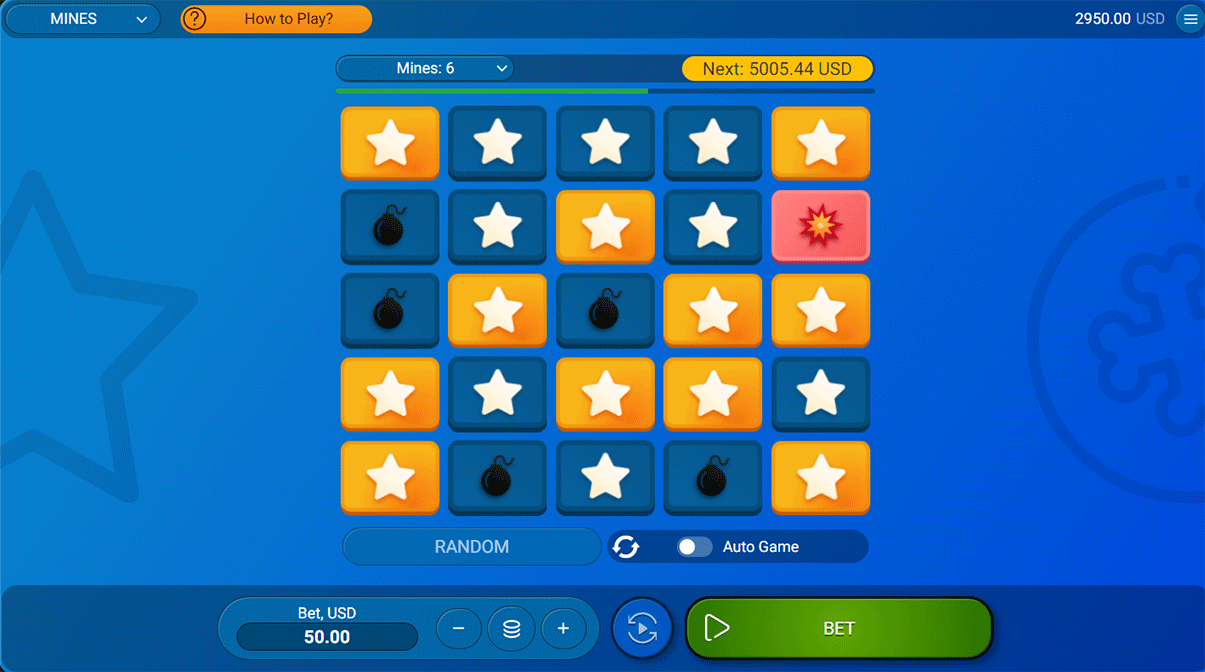
Good Mines game educational resources begin with the basic round structure. Although exact rules vary by casino and software provider, most Mines games follow a familiar sequence. First, the player chooses a wager. Second, the player selects how many mines will be hidden across the grid. Third, the game generates a randomized board. Fourth, the player reveals tiles one at a time. Safe tiles increase the payout multiplier. A mine ends the round and usually loses the bet. The player can cash out after a successful pick if the rules allow it.
Step-by-Step Gameplay
- Choose your stake: Select a bet size that fits your bankroll and session limit.
- Select the mine count: A low number of mines creates a higher chance of safe picks; a high number creates bigger multipliers but greater risk.
- Reveal a tile: Pick one hidden square on the grid.
- Watch the multiplier: If the tile is safe, the potential payout increases according to the paytable.
- Decide whether to continue: You can often reveal another tile or cash out the current amount.
- End the round: Cashing out locks the win; hitting a mine ends the round.
Mines game educational resources should make clear that picking a specific tile is not a skill advantage if the board is randomly generated. The decision that matters most is not whether you choose a corner, edge, or center. The meaningful decision is your risk level: mine count, number of picks, bet size, and cash-out discipline.
Understanding Probability Per Pick
On a standard 25-tile board with 3 mines, the first pick has 22 safe tiles and 3 losing tiles. That means the first-click survival chance is 22 out of 25, or 88%. If you reveal one safe tile, there are 21 safe tiles and 3 mines remaining among 24 unopened tiles. The risk rises with every successful reveal because fewer safe tiles remain. This changing probability is one of the core topics covered by advanced Mines game educational resources.
Many beginners focus only on the multiplier and ignore the rising chance of failure. A proper learning tool should show both. If the multiplier increases after each pick, it is because the next decision is statistically more dangerous. The payout ladder is not a gift; it is compensation for accepting additional risk.
Provably Fair Checks
Crypto-focused Mines game educational resources often explain provably fair systems. In these games, the result is usually produced from a server seed, client seed, and nonce. After the round, the casino may reveal enough information for the player to verify that the result was not changed after the bet was placed. This does not mean the player can predict the board in advance. It means the round can be audited after completion.
When evaluating a Mines casino, look for clear seed controls, transparent verification pages, published game rules, and stable payout tables. If a site claims fairness but does not allow practical verification, players should treat that claim with caution.
Bonus Features and Learning Tools
Although Mines is usually simpler than video slots, modern versions may include bonus features, missions, leaderboards, tournaments, rakeback, bonus buy-style promotions, and demo play. Mines game educational resources should separate entertainment features from mathematical value. A leaderboard may make the game more exciting, but it does not change the odds of any individual tile. A cashback offer may reduce losses under certain conditions, but wagering rules can limit its real value.
Demo Mode and Simulators
Demo play is one of the most valuable Mines game educational resources because it allows players to test volatility without financial pressure. A simulator can show how quickly a conservative plan can be disrupted by one losing round, or how rarely extreme mine counts produce successful cashouts. The point of demo mode is not to discover a magic pattern. It is to experience variance and build realistic expectations.
Probability Calculators
A probability calculator helps players estimate survival odds before committing to a plan. For example, choosing 1 mine and revealing 5 tiles creates a very different risk profile than choosing 10 mines and revealing 2 tiles. The best Mines game educational resources show cumulative survival probability rather than only the next-click odds. This matters because a series of “small” risks can add up to a much larger overall chance of failure.
Promotions, Free Bets, and Cashback
Casino bonuses can make Mines more appealing, but they must be read carefully. Some promotions exclude instant games, some reduce wagering contribution, and some cap winnings. If a free bet applies to Mines, the player should still review RTP, maximum cashout, minimum odds, and withdrawal terms. Responsible Mines game educational resources teach players to compare the value of a bonus against its restrictions rather than chasing headline numbers.
RTP and Volatility: The Mathematics Behind Mines
Mines game educational resources are most useful when they explain RTP and volatility in plain language. RTP, or return to player, is the long-term theoretical percentage of wagers returned to players across many rounds. A game with 98% RTP is still expected to keep around 2% over the long run, before bonuses or promotions. RTP does not guarantee what will happen in one session.
Volatility describes how results are distributed. Low-volatility Mines settings usually produce frequent small cashouts and occasional losses. High-volatility settings produce more losing rounds and larger possible multipliers. Because players can often choose the mine count, Mines has adjustable volatility, which is one reason it is so widely discussed in casino strategy communities.
Low-Mine Strategy
The low-mine approach usually involves selecting 1 or 2 mines and cashing out after a limited number of safe picks. Many Mines game educational resources present this as a conservative style, but conservative does not mean risk-free. Small wins can be erased by one unlucky mine, especially if the player increases bet size after losses. The key lesson is that lower volatility may smooth the ride, but it does not remove the house edge.
High-Mine Strategy
High-mine play is the opposite. A player may select 15, 20, or more mines and attempt one successful pick for a large multiplier. Some players like this because it creates quick, dramatic outcomes. Educationally, it is a clear example of high variance: most attempts fail, while rare successes produce bigger payouts. Mines game educational resources should warn that this style can drain a bankroll quickly if stakes are not kept small.
The Pattern Fallacy
One of the most persistent Mines myths is that certain visual patterns are safer. Corners, diagonals, crosses, checkerboards, and “random-looking” clicks are often promoted in forums. Reliable Mines game educational resources reject this idea. If the game is fair and random, a tile’s position does not become safer because of a past round or because it forms a pleasing shape. Pattern betting may feel strategic, but it does not change probability.
Martingale and Progression Systems
Betting progressions such as Martingale, Fibonacci, and Labouchere appear in many casino discussions. They can create the illusion of control by changing stake size after wins or losses. However, they do not alter the underlying odds. In Mines, a losing streak can escalate bet sizes quickly, and table limits or bankroll limits can stop the system before recovery occurs. Strong Mines game educational resources explain that bankroll management is about controlling exposure, not defeating probability.
Comparing Mines With Other Instant-Win Games
To understand why Mines game educational resources matter, it helps to compare Mines with similar casino games. In crash games, the main decision is when to cash out before the multiplier collapses. In Plinko, the player usually sets risk and watches the ball fall. In dice, the player chooses a target probability and payout. Mines combines elements of all three: adjustable risk, visible multipliers, and repeated cash-out decisions.
Compared with slots, Mines has fewer symbols, fewer paylines, and less narrative complexity. The learning curve is shorter, but the emotional pressure can be higher because the player personally selects the losing tile. This is why emotional discipline is a major theme in Mines game educational resources. Players may blame themselves for a loss, chase the next round, or assume they can “read” the board. Education helps counter those reactions with math.
Responsible Play and Bankroll Management
The most trustworthy Mines game educational resources include responsible gambling guidance. Before playing, set a budget, session length, and stop-loss limit. Decide in advance how many picks you will attempt and when you will cash out. Avoid increasing stakes emotionally after a loss. Do not treat Mines as income, investment, or a guaranteed advantage opportunity.
Useful bankroll habits include flat betting, smaller stakes during high-volatility settings, cooling-off breaks, and using casino limit tools. If Mines stops feeling like entertainment or begins causing financial stress, players should pause and seek support. Education is valuable only when it leads to safer, more informed choices.
FAQ
Q: Are Mines game educational resources enough to make the game profitable?
Q: What is the best way to learn Mines before betting real money?
Q: Do tile patterns improve my chances in Mines?
Q: Is a higher mine count better because the multiplier is larger?
Final Thoughts
Mines game educational resources are essential for anyone who wants to understand this fast, interactive casino format in 2026. The game is easy to play but mathematically serious: every click changes the risk, every multiplier reflects probability, and every session is shaped by volatility. The strongest approach is to study the rules, verify fairness where possible, use demo tools, manage your bankroll, and treat Mines as entertainment rather than a reliable way to win money.