
Quick Summary
The Mines casino game historical overview begins with classic computer puzzle design and leads to one of the most recognizable instant-win casino formats in 2026. Mines evolved from grid-based logic games into a provably fair wagering experience where players select safe tiles, avoid hidden mines, and decide when to cash out. Its popularity comes from simple rules, transparent odds, adjustable risk, mobile-friendly design, and a powerful mix of strategy, probability, and suspense.
| Key Fact | Details |
|---|---|
| Game Type | Instant-win casino game inspired by grid-based mine avoidance puzzles |
| Common Layout | 5×5 grid with 25 tiles |
| Core Goal | Reveal safe tiles and cash out before hitting a mine |
| Risk Control | Players usually choose the number of mines before each round |
| Typical RTP Range | Often around 96% to 99%, depending on provider and casino settings |
| Main Appeal | Fast rounds, adjustable volatility, transparent odds, and active decision-making |
| 2026 Trend | More regulated versions, richer themes, mobile-first play, and improved provably fair tools |
Overview: Mines casino game historical overview
The Mines casino game historical overview is best understood as the story of how a familiar puzzle idea became a modern gambling product. Long before Mines appeared in online casinos, players were already comfortable with the basic concept: a hidden field, dangerous squares, safe choices, and the thrill of deduction. Early computer puzzle games used grid logic to create tension without needing complicated graphics. That same design language later made Mines easy for casino players to understand within seconds.
The most important cultural ancestor is Minesweeper, the classic desktop puzzle that became globally famous through Microsoft Windows. Its purpose was not gambling. It trained users to move a mouse, click accurately, and interpret visual clues on a screen. Yet the emotional structure was already casino-like: every click carried uncertainty, each safe reveal built confidence, and one wrong square could end the round. The Mines casino game historical overview shows that online casinos did not invent the tension; they monetized and streamlined it.
As online gambling matured, developers searched for games that felt more interactive than slots but simpler than poker or blackjack. Mines fit that gap perfectly. It did not require reels, paylines, card rankings, or dealer rules. A player could choose a stake, select a mine count, click tiles, and cash out. This made the game especially attractive to crypto casinos and instant-win platforms because the outcome could be represented clearly by a random arrangement of hidden tiles.
The Mines casino game historical overview also reflects a broader shift in player expectations. Many younger casino users prefer games that feel transparent, quick, and skill-adjacent, even when the mathematics remain random. Mines delivers perceived control because every click is a decision. Compared with passive slot spins, it gives the player a stronger sense of involvement, even though each tile outcome is governed by random number generation or a provably fair algorithm.
From puzzle culture to real-money gaming
The bridge from Minesweeper-style puzzles to real-money Mines was built by online casino innovation. Early digital casinos focused mainly on slots, roulette, blackjack, and video poker. Later, crypto-first operators introduced simpler games with verifiable fairness and instant settlement. The Mines casino game historical overview therefore belongs to the same family as crash games, dice, limbo, and plinko: games designed for speed, transparency, and flexible risk.
Provably fair systems were a major turning point. In many Mines versions, a server seed, client seed, and nonce generate the hidden mine positions. After the round, players can verify that the casino did not change the board after the first click. This technological feature gave Mines credibility among players who distrusted traditional black-box casino systems. The Mines casino game historical overview is not only about nostalgia; it is about trust, cryptography, and the demand for visible fairness.
How to Play Mines
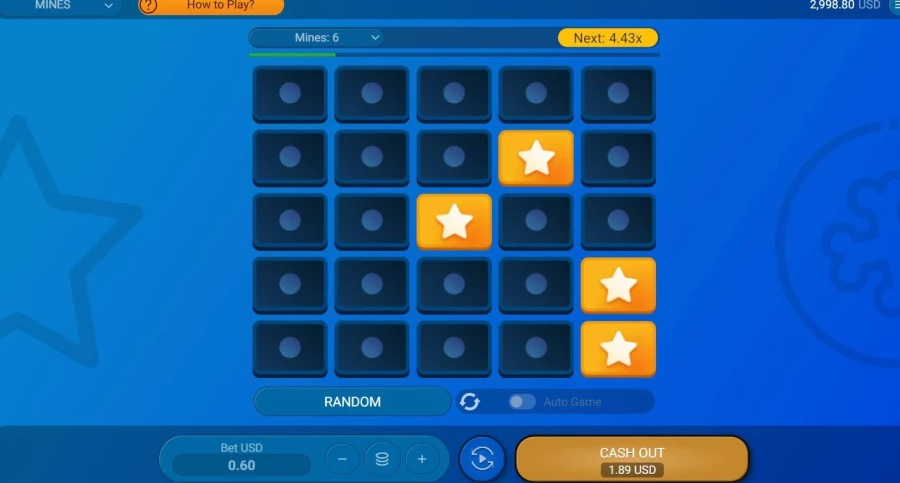
Although themes vary, the rules are usually straightforward. A player selects a wager, chooses how many mines will be hidden on the board, and starts the round. The grid is commonly 5×5, creating 25 concealed tiles. Safe tiles increase the payout multiplier. A mine ends the round and usually forfeits the stake unless the player has already cashed out. This simplicity is one reason the Mines casino game historical overview has become relevant to both beginners and experienced casino players.
Step-by-step gameplay
First, choose your bet size. Responsible players usually set a small stake relative to their bankroll because even low-risk boards can lose. Second, choose the mine count. One mine creates a safer experience with smaller multiplier growth, while a high mine count creates extreme volatility. Third, reveal tiles one at a time. Every safe click raises the cash-out value. Finally, decide when to stop. The central drama of Mines is not only whether you can pick safe tiles, but whether you can leave before greed overrides discipline.
The Mines casino game historical overview proves that this stop-or-continue decision is the heart of the format. Unlike a slot spin, where the result is delivered automatically, Mines asks the player to manage risk after every safe reveal. This creates a psychological rhythm similar to crash games: the multiplier becomes more tempting as the danger increases.
Common player approaches
Players often use structured approaches to keep sessions consistent. A low-risk method is to select one to three mines and cash out after a few safe clicks. A high-risk method is to select many mines and aim for just one or two successful picks at a large multiplier. Some players use fixed tile patterns such as corners, diagonals, or crosses. These patterns do not change the mathematical probability, but they can reduce impulsive decision-making.
The Mines casino game historical overview makes one point clear: no pattern can predict a truly random board. If the game is properly certified or provably fair, each round is independent. Strategies should therefore focus on bankroll management, mine selection, and cash-out discipline rather than prediction.
Bonus Features and Modern Enhancements
Classic Mines is intentionally minimal, but modern versions often include bonus-style tools that improve usability and entertainment. The Mines casino game historical overview has moved far beyond plain grey tiles. In 2026, many casinos offer polished animations, sound effects, themed boards, turbo modes, auto-pick tools, statistics panels, and mobile-optimized controls.
Cash out, auto play, and turbo modes
The cash-out button is the most important feature in Mines. It turns an open round into a risk-management exercise. Some versions also provide auto play, allowing players to define a mine count, number of picks, stop-loss limit, and stop-win target. Turbo mode speeds up tile reveals for users who prefer rapid rounds. These tools are convenient, but they can increase session speed, so they should be used carefully.
From the Mines casino game historical overview perspective, these features show how a puzzle mechanic became a casino product. Developers added pacing controls, interface feedback, and bankroll settings to make the experience suitable for real-money play. A good Mines game is not just random; it is readable, responsive, and easy to audit.
Themes, mobile design, and social elements
Many new Mines titles replace military mines with gems, monsters, bombs, treasure chests, stars, or space hazards. The math may remain similar, but the presentation changes the mood. Mobile design is also crucial because Mines works naturally on touchscreens. Tapping tiles feels intuitive, and short rounds fit modern gaming habits.
Some platforms add live statistics, recent win feeds, leaderboards, or community challenges. These social elements make the game feel more active, but players should remember that other users’ results do not influence their own board. The Mines casino game historical overview shows a consistent pattern: the format succeeds when it feels personal, transparent, and fast without becoming confusing.
RTP/Volatility: Understanding the Math
RTP, or return to player, describes the theoretical percentage of wagered money a game returns over a very large sample. Mines often advertises a high RTP compared with many slots, sometimes in the 96% to 99% range. However, the exact figure depends on the provider, casino configuration, and house edge. The Mines casino game historical overview is closely linked to RTP because transparent math is one of the game’s strongest selling points.
How mine count changes volatility
Volatility describes how uneven the results can be. With fewer mines, safe tiles are more common, multipliers rise slowly, and wins occur more frequently. With more mines, safe clicks are rarer, but the payout multiplier rises faster. This means Mines lets players tune their risk level before the round begins. Few casino games offer such direct control over volatility.
The Mines casino game historical overview highlights why this adjustable volatility became popular. A cautious player can play low-mine boards and cash out early. A thrill-seeker can choose a crowded minefield and chase a large multiplier. Both are playing the same core game, but the risk profile feels completely different.
Probability and the illusion of control
Suppose a 25-tile board contains one mine. The first click has a 24 out of 25 chance of being safe. If the board contains 10 mines, the first click has only a 15 out of 25 chance of being safe. After every safe tile, the remaining ratio changes. Good Mines interfaces calculate the multiplier around these probabilities and the house edge.
The key lesson from the Mines casino game historical overview is that active clicking does not equal skill in the traditional sense. Mines involves decision-making, but not reliable prediction. The most practical skills are choosing suitable stakes, understanding probability, avoiding emotional chasing, and cashing out according to a plan.
Why Mines Became a Casino Staple
The Mines casino game historical overview reveals several reasons for the game’s rise. First, it is instantly understandable. A new player does not need a paytable with hundreds of symbol combinations. Second, it supports very short sessions. Third, it creates suspense with every click. Fourth, it adapts well to provably fair technology, which is especially important for players who value verification.
Mines also sits between several casino categories. It has the quickness of an instant-win game, the multiplier tension of crash games, the simplicity of dice, and the visual clarity of a puzzle. That hybrid identity gives it broad appeal. It is not a traditional slot, but slot players often enjoy it because it offers fast outcomes and potential multipliers.
Mines versus crash, plinko, and slots
Compared with crash games, Mines is turn-based rather than time-based. A crash player must act before the curve collapses, while a Mines player can pause between clicks. Compared with plinko, Mines is more interactive because the player makes repeated decisions instead of watching a ball fall. Compared with slots, Mines is cleaner and more transparent, although it lacks the cinematic bonus rounds and large progressive jackpots associated with some slot titles.
The Mines casino game historical overview also explains why casino lobbies often place Mines near crash, dice, and other instant games. It appeals to users who want speed and control rather than complex narratives. In regulated markets, certified RNG versions give casinos another way to offer innovative gameplay while maintaining compliance standards.
Responsible Play and Practical Tips
Because Mines can be fast and emotionally intense, responsible play matters. Set a budget before starting, decide your mine count in advance, and avoid increasing stakes just to recover losses. The Mines casino game historical overview includes many stories of players attracted by high multipliers, but sustainable play depends on accepting that every round can end immediately.
Use demo mode when available to learn the interface. Check the game information page for RTP, house edge, and fairness details. If a version offers provably fair verification, learn how seeds work. Avoid believing that previous boards reveal future patterns. Random games do not owe wins after losses, and long losing streaks can happen even with sensible settings.
FAQ
Q: What is the origin of the Mines casino game?
Q: Is Mines a skill game or a chance game?
Q: What is a good RTP for Mines?
Q: Why is Mines popular in crypto casinos?
Q: What is the safest way to play Mines?
Final Thoughts
The Mines casino game historical overview shows how a simple grid concept became one of the defining instant-win formats of modern online gambling. Its success comes from clarity: players know the goal, understand the danger, and feel the pressure of every decision. In 2026, Mines continues to grow because it combines nostalgia, transparent mathematics, mobile convenience, and adjustable volatility in a compact package.
For players, the best approach is to appreciate the game’s history while respecting its randomness. Choose reputable casinos, review RTP and fairness information, manage your bankroll, and remember that the cash-out button is as important as the next click. That balance of history, technology, and disciplined play is what makes the Mines casino game historical overview essential reading for anyone interested in modern casino game design.